


Essential Guide to Urban Tree Selection for South Central Pennsylvania Residents
Urban tree planting plays a vital role in shaping the health and beauty of our communities. Choosing the right tree species for your yard, street, or park can improve air quality, provide shade, and support local wildlife. The ISA's Arborist News article titled "A Comprehensive Guide to Species Selection for Urban Tree Planting" from Volume 33, Number 4, August 2024, offers a clear framework for selecting trees that thrive in urban environments. This post summarizes the article’s key findings, focusing on the three phases of tree selection: Needs, Plant Site, and Species Selection. It also highlights species suitable for south central Pennsylvania and local nurseries where you can find them.
Visualizing the Tree Selection Process
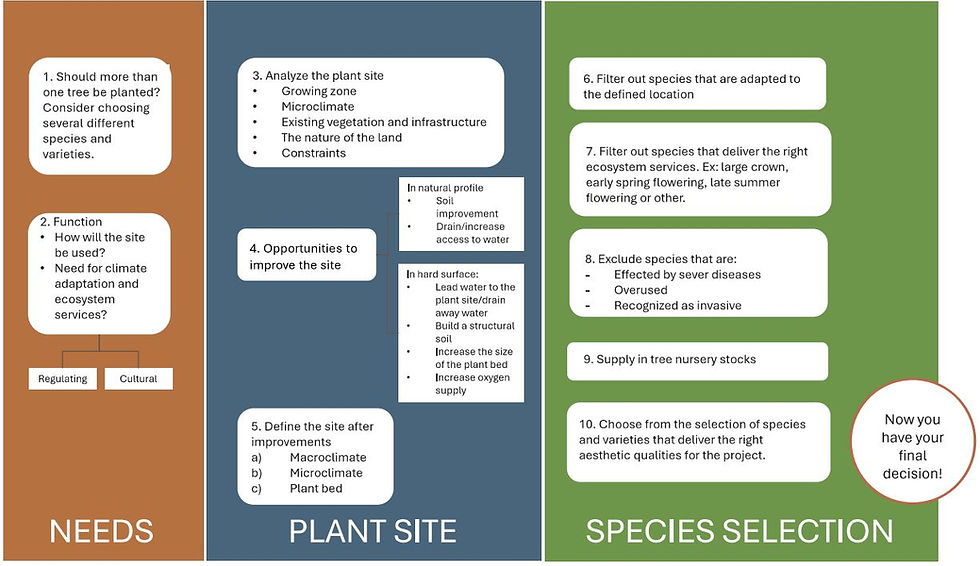
The ISA article includes a helpful flow diagram on page 31 that outlines the decision-making steps across the three phases. This diagram guides users from identifying needs through site evaluation to species choice, ensuring a systematic approach to urban tree planting. The diagram is included below for reference.
Understanding the Three Phases of Tree Selection
The article breaks down the tree selection process into three essential phases. Each phase contains steps that guide homeowners and municipalities through making informed decisions for urban forest development.
Phase 1: Needs
This phase focuses on identifying the purpose and goals for planting trees. The steps include:
Define the purpose: Are you planting for shade, aesthetics, wildlife habitat, stormwater management, or air quality improvement? Knowing the goal helps narrow species choices.
Consider maintenance: How much time and resources can you dedicate to tree care? Some species require more pruning, watering, or pest management.
Assess budget: Costs vary by species and size. Planning helps avoid surprises.
Plan for longevity: Choose trees that will thrive long-term in your urban setting.
For south central Pennsylvania, common needs include shade for homes and streets, erosion control near waterways, and enhancing neighborhood green spaces.
Phase 2: Plant Site
The plant site phase evaluates the physical conditions where the tree will grow. Steps include:
Site Improvements: Does the site require improvements prior to planting?
Soil type and quality: Test soil pH, drainage, and fertility. South central Pennsylvania soils often range from loamy to clayey, affecting species suitability.
Space availability: Measure overhead and underground space to avoid conflicts with power lines, sidewalks, and foundations.
Sunlight exposure: Determine if the site receives full sun, partial shade, or full shade.
Climate considerations: South central Pennsylvania experiences cold winters and hot summers, so species must tolerate temperature extremes.
Water availability: Urban sites may have limited water access or drainage issues.
Matching tree species to these site conditions reduces stress and improves survival rates.
Phase 3: Species Selection
This phase involves choosing species based on the needs and site analysis. Steps include:
Select species with appropriate size: Consider mature height and spread to fit the space.
Choose native or well-adapted species: Native trees support local ecosystems and are often more resilient.
Evaluate pest and disease resistance: Avoid species prone to common urban pests.
Consider diversity: Plant a variety of species to reduce risk from pests or disease outbreaks.
Check availability: Confirm that nurseries in your area stock the chosen species.
Recommended Trees for South Central Pennsylvania Urban Forests
Based on the ISA article and local climate, here is a list of trees well-suited for urban tree planting in south central Pennsylvania:
Red Maple (Acer rubrum)
Adaptable to various soils, provides brilliant fall color, and tolerates urban conditions.
White Oak (Quercus alba)
Long-lived native species with strong wood and excellent wildlife value.
Serviceberry (Amelanchier canadensis)
Small tree with spring flowers and edible berries, ideal for smaller spaces.
Tulip Poplar (Liriodendron tulipifera)
Fast-growing with distinctive tulip-shaped flowers, prefers well-drained soils.
Eastern Redbud (Cercis canadensis)
Small ornamental tree with early spring blooms, tolerates partial shade.
Honeylocust (Gleditsia triacanthos var. inermis)
Provides filtered shade with delicate leaves, good for streetscapes.
American Hornbeam (Carpinus caroliniana)
Small to medium tree with attractive bark and tolerance for wet soils.
Black Gum (Nyssa sylvatica)
Brilliant fall colors and adaptable to a range of soil types.
Local Nurseries Offering Urban Tree Species
Finding healthy trees locally ensures better acclimation and support. Here are some nurseries in south central Pennsylvania where you can purchase recommended species:
Maple Lane Nursery
Wide selection of high quality trees, shrubs, and plants.
Location - 10680 Cumberland Hwy, Orrstown, PA 17244
Lurgan Greenhouse
Garden center offering a selection of plants, along with landscaping services, and outdoor furniture.
Location - 8126 Oakdale Rd Orrstown, PA 17244
Franklin County Conservation District
The district offers an annual tree seedling sale using excellent stock from state-certified nurseries, but plan ahead because once the sale is closed you must wait until the following year to get more trees. Check their site in January to place an order.
Location - 185 Franklin Farm Lane Chambersburg, PA 17202
PA Dept of Agriculture
Visit Pennsylvania's Department of Agriculture online to find additional certified nurseries and plant merchants.
Before purchasing, ask nursery staff about tree size, root condition, and care instructions to ensure successful planting.
Taking Action for a Healthier Urban Forest
Selecting the right tree species is the foundation for a thriving urban forest in south central Pennsylvania. By carefully considering your needs, site conditions, and species characteristics, you can plant trees that grow strong and provide benefits for decades.
If you need expert advice, contact Antrim Tree Service. Their experienced arborists can help you choose the best trees for your property and ensure proper planting and care. Building a healthy urban forest starts with the right choices today.
References
Nasslander, G., Ostberg, J. ISA Arborist News. A Comprehensive Guide to Species Selection for Urban Tree Planting. Volume 33. Number 4. August 2024.
Franklin County Conservation District. https://franklinccd.org/events/tree-seedling-sale/
PA Dept of Ag. https://www.paplants.pa.gov/Licenses/PlantMerchantSearch.aspx

Comments