


Property Management Tree Maintenance Strategies that Minimize Liability and Maximize ROI
Property managers in South-Central Pennsylvania, including Franklin County, face unique challenges when it comes to managing commercial properties. One often overlooked but critical aspect is tree maintenance. Trees add beauty and value to commercial properties, but without proper care, they can become liabilities that lead to costly storm damage and legal risks. This post explains how proactive tree maintenance protects your business, reduces liability, and delivers long-term financial benefits.

Why Tree Maintenance Matters for Property Managers
Trees on commercial properties are assets that require regular care. Neglecting tree maintenance can lead to:
Falling branches damaging vehicles and buildings, or injuring pedestrians
Root damage affecting sidewalks and underground utilities
Increased risk of tree failure during storms
Legal liability for injuries or property damage
In Franklin County, where storms with strong winds and heavy snow are common, unmanaged trees can cause significant damage. Property managers must understand that tree maintenance is not just landscaping; it is a risk management strategy.
Financial Impact of Tree Damage on Commercial Properties
Storm damage caused by trees can lead to expensive repairs and insurance claims. For example:
A falling branch can crack windows or dent vehicles, costing thousands in repairs.
Uprooted trees can damage roofs, siding, or underground pipes, with repair bills easily exceeding $10,000.
Legal claims from injuries caused by falling limbs can result in costly settlements or increased insurance premiums.
A 2022 study by the International Society of Arboriculture found that commercial properties with regular tree maintenance experienced 40% fewer storm-related damages. This translates into significant savings on repairs, insurance costs, and business downtime.
Proactive Tree Care Delivers Long-Term ROI
Investing in regular tree maintenance offers a strong return on investment by:
Extending tree health and lifespan, preserving property value
Reducing emergency tree removal costs after storms
Lowering liability risks and insurance premiums
Enhancing curb appeal, attracting tenants and customers
For example, Antrim Tree Service has worked with multiple Franklin County commercial property managers to save thousands in storm damage repairs by implementing proactive, scheduled tree care programs. Eagle Construction, Mason-Dixon Auto Auction, and Rescue Hose Company No. 1 are just a few of our recent commercial clients in Greencastle, PA.
Key Tree Maintenance Strategies for Property Managers
1. Regular Tree Inspections
Schedule professional inspections at least twice a year to identify:
Dead or weak branches
Signs of disease or pest infestation
Structural weaknesses or root problems
Early detection allows for timely pruning or treatment, preventing costly damage.
2. Pruning and Trimming
Proper pruning removes hazardous limbs and promotes healthy growth. Focus on:
Removing dead or damaged branches
Thinning dense canopies to reduce wind resistance
Clearing branches away from buildings, power lines, and walkways
3. Root Management
Roots can damage sidewalks and underground utilities, creating safety hazards and repair costs. Root pruning, barrier installation, and proper mulching can protect infrastructure while maintaining tree health.
4. Storm Preparation
Before storm season, clear loose branches and debris. Consider cabling or bracing weak limbs to reduce breakage risk.
5. Emergency Response Plan
Establishing a partnership with a reliable tree service, such as Antrim Tree Service, is essential for prompt action following storms. This quick response is crucial for removing hazards and reducing business downtime. When operations are halted, revenue generation ceases, underscoring the importance of having a proactive plan in place to mitigate these losses.
How Antrim Tree Service Supports Property Managers
Antrim Tree Service specializes in tree care in South-Central Pennsylvania. Their services include:
Comprehensive tree inspections tailored for commercial properties
Expert pruning and trimming to reduce liability
Root management solutions to protect infrastructure
Emergency storm damage cleanup and removal
Customized maintenance plans that fit your budget and schedule
Partnering with Antrim Tree Service helps property managers protect their investments and reduce risks.
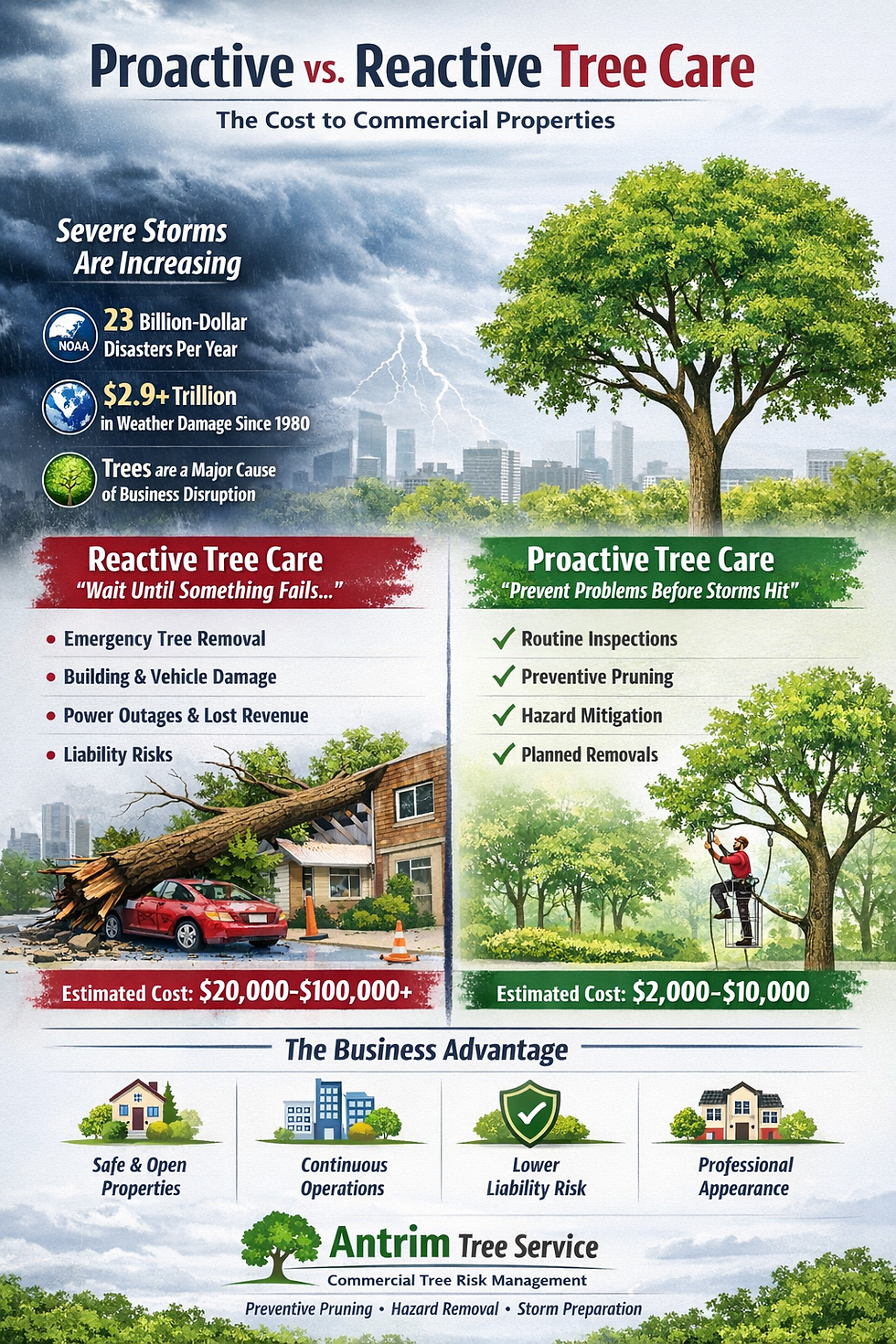
Cost Comparison of Reactive vs. Proactive Tree Care
The infographic below highlights the cost difference between proactive and reactive tree care. Proactive maintenance helps businesses reduce risk, control costs, and avoid unexpected disruptions.
Local Considerations for Franklin County Property Managers
Franklin County’s climate includes cold winters with snow and ice, and occasional strong winds. These conditions stress trees and increase the risk of limb breakage. Property managers should:
Schedule inspections before winter and after major storms
Focus on species common in the region, such as oaks, maples, and pines, which have specific care needs
Work with local experts familiar with Franklin County’s environment and regulations
Final Thoughts on Tree Maintenance and Liability
Trees enhance commercial properties but require ongoing care to avoid becoming liabilities. Property managers who invest in proactive tree maintenance reduce the risk of costly storm damage and legal claims. This approach not only protects assets but also improves tenant satisfaction and property appeal.
Taking action today with a trusted partner like Antrim Tree Service ensures your commercial property in Franklin County remains safe, attractive, and financially sound.
Contact Antrim Tree Service at 814-386-4236 or Book Online to schedule a tree inspection and start protecting your business from tree-related risks.
References
International Society of Arboriculture. (2022). Storm Damage and Tree Maintenance Report.
Franklin County Climate Data. National Weather Service.
Antrim Tree Service client case studies (2023-2025).


Comments